
Every traveler carries a camera. Few carry the eye. The difference between a snapshot and a photograph that stops people mid-scroll is rarely about megapixels — it is about understanding light, composition, and the patience to wait for the decisive moment.
Understand Light Before Anything Else
Light is everything in photography. The same street, the same subject, the same camera — photographed at noon versus golden hour — produces entirely different images.
The golden hours (the hour after sunrise and before sunset) produce warm, directional, soft light that flatters nearly any subject. The blue hour (the 20 minutes immediately after sunset) gives skies a deep cobalt richness that is impossible to replicate in editing.
Midday sun creates harsh shadows and blown-out highlights. If you must shoot at noon, look for shaded areas, reflective surfaces, or embrace the contrast intentionally.
Composition: The Rules Worth Knowing (and Breaking)
Rule of Thirds Divide your frame into a 3×3 grid. Place your subject at one of the four intersection points rather than dead center. This creates visual tension and energy that feels more natural to the eye.
Leading Lines Roads, rivers, staircases, fences — any line that draws the eye from the foreground into the background adds depth and dimension to a flat image. Look for them constantly.
Foreground Interest Including something in the foreground — a flower, a rock, a person’s shoulder — instantly creates a sense of three-dimensional space in a two-dimensional image.
Frame Within a Frame Doorways, windows, arches, and tree branches can all act as natural frames that direct attention to your subject and add layers to your composition.
The Decisive Moment
Henri Cartier-Bresson’s concept of the “decisive moment” — the fraction of a second when form, content, and composition align perfectly — is the soul of great photography. It cannot be manufactured. It can only be anticipated.
This means spending time in one location. Scouting your shot before committing to it. Returning at different times of day. Waiting for a person to walk into the frame.
The photographers whose images stop you are almost always the ones who stayed longer than everyone else.
Practical Gear Advice
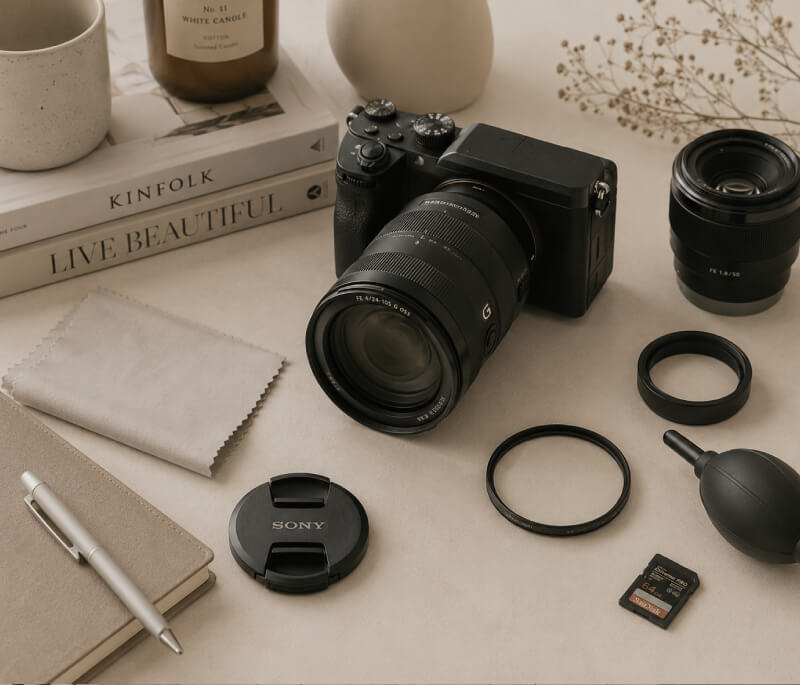
You do not need a full-frame DSLR to make great photographs. A modern smartphone with a good camera app (Lightroom Mobile, ProCam) and manual controls is genuinely capable of extraordinary results.
What actually matters:
- A sturdy compact tripod for long exposures and sharp low-light images
- Extra batteries — cold weather and heavy use drain them faster than you expect
- A lens cloth — a smudged lens destroys more photos than bad composition ever will
- Shooting RAW if your device supports it, for maximum editing flexibility
Editing: Enhance, Don’t Transform
The best edits are invisible. Adjusting exposure, contrast, white balance, and clarity should serve the image you captured — not compensate for a fundamentally flawed shot.
Resist the temptation to over-saturate colors or apply heavy presets. Authenticity in travel photography is increasingly valued. Show the world as it actually is, just at its most beautifully lit.
The camera records. The photographer sees. Develop your eye and the rest follows.